Best In-Drawer Knife Storage: Safe Double-Step Tray
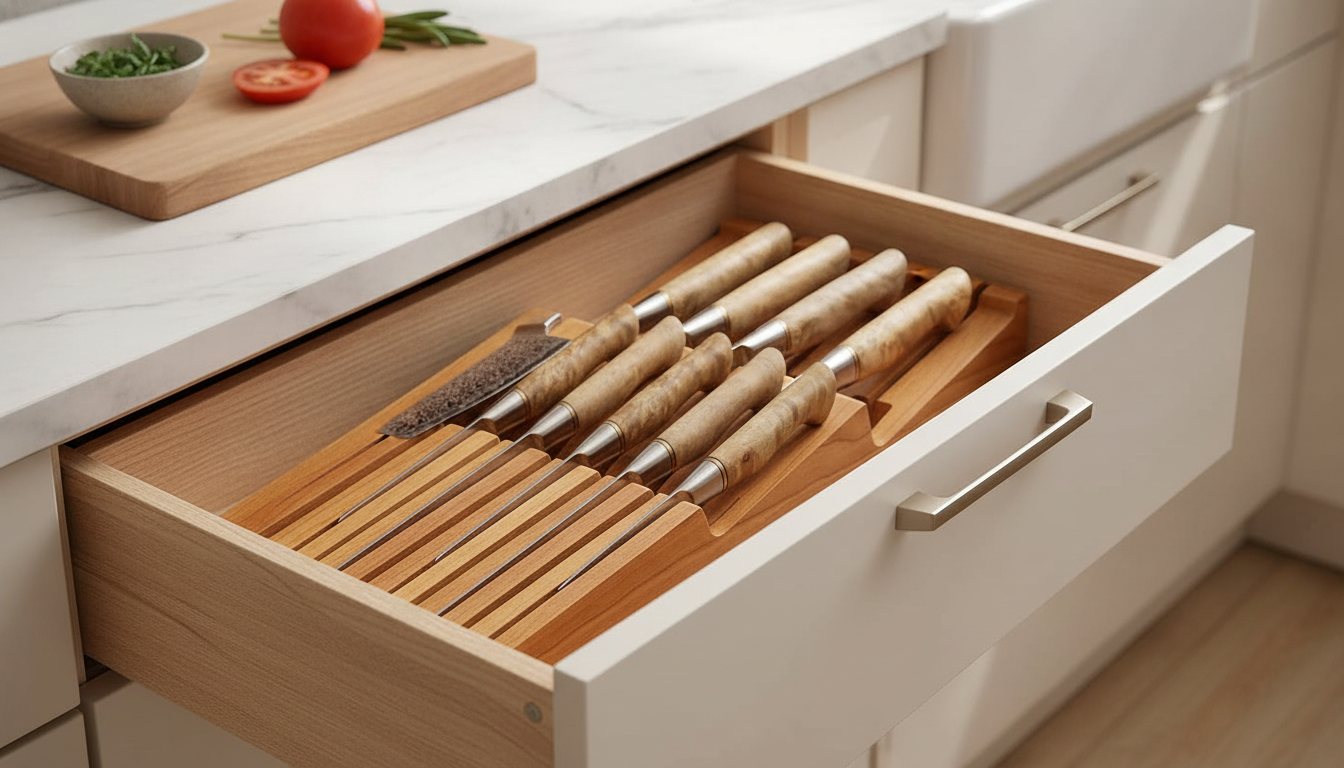
What is the best in-drawer knife storage option?
The best in-drawer knife storage option is a dedicated in-drawer knife tray that locks blades into individual slots, keeps edges from bumping into each other, and fits your drawer depth without forcing knives to sit at an angle. Compared with tossing knives into a drawer organizer bin or using loose blade guards, a purpose-built tray is faster to use daily, easier to keep tidy, and safer for hands and cutting edges.
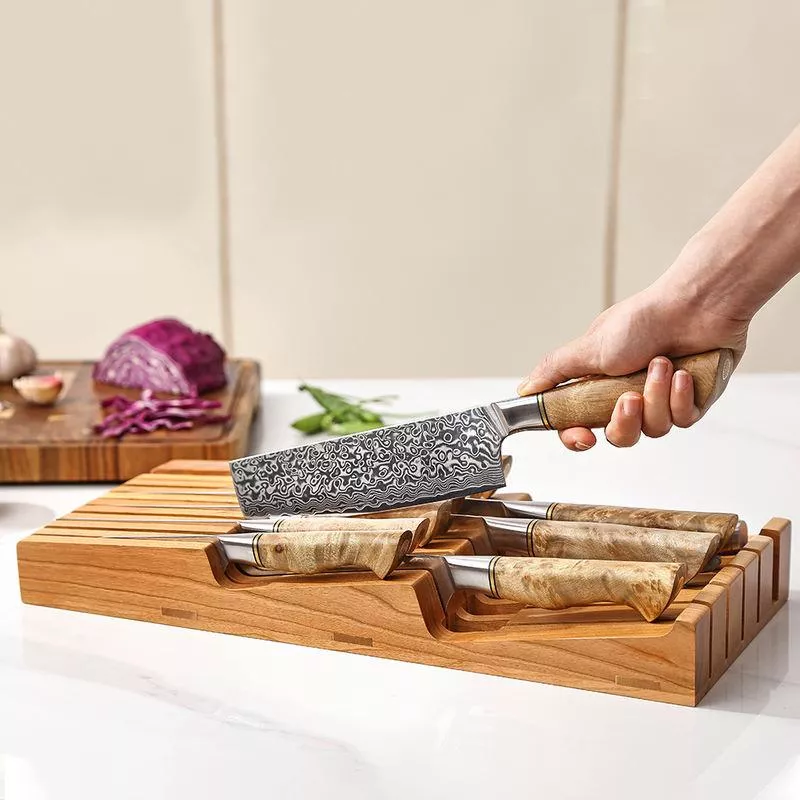
For most kitchens, a double-step tray design is the sweet spot: it staggers handle and blade heights so more knives fit in less space while still allowing easy grab-and-go access. Look for a tray with clearly separated slots (rather than wide channels), enough openings for your real mix of knives (chef’s, bread, santoku, utility, paring), and a base that won’t slide around when the drawer opens.
What to look for in a top in-drawer knife tray
Secure, separated slots: Individual slots reduce edge contact and help prevent nicks and dulling. They also keep knives from shifting when the drawer moves.
Capacity that matches your set: Count the knives you actually store, then add a little buffer. An 11-slot tray often covers a typical home lineup without feeling crowded.
Drawer fit and clearance: Measure inside drawer width, depth, and height clearance (especially if the drawer sits under a countertop lip). A stepped tray improves clearance, but tall handles can still be a factor.
Material and finish: Wood trays (like cherry) look elevated, feel solid, and are gentle on blades. A smooth finish also helps with quick wipe-down cleaning.
Why an in-drawer tray beats other options
Knife blocks take up counter space and collect dust around the slots. Magnetic strips can be great, but they keep sharp edges exposed and require careful mounting. An in-drawer tray keeps knives out of sight, reduces accidental contact, and protects edges while freeing up your countertop.
For a closer look at sizing, slot layout, and why a double-step design works so well, see the full guide here: cherry wood in-drawer knife tray (double-step, 11-slot).
FAQ
How do I measure my drawer for an in-drawer knife tray?
Measure the inside width and depth of the drawer (not the cabinet opening), then check vertical clearance from the drawer base to the lowest obstruction above. Compare those numbers to the tray dimensions and leave a little room so the tray sits flat and the drawer closes freely.










Leave a comment