Cherry Wood Knife Handles: Pros, Cons, and Care

Is cherry wood good for knife handles?
Cherry wood can be a good choice for knife handles when you want a warm, classic look and a comfortable, slightly grippy feel. It’s a moderately hard hardwood that machines cleanly, takes a smooth finish, and develops a richer color over time. For many kitchen and light-duty knives, cherry offers a pleasant balance of beauty and usability without feeling overly heavy in the hand.
That said, cherry isn’t the toughest handle material available. It’s less dense than woods like hickory or exotic options like rosewood, and it can dent or scratch more easily if the knife is dropped or banged against hard surfaces. If you’re tough on tools or want maximum impact resistance, you may prefer a denser hardwood, stabilized wood, or synthetic handle scales.
How cherry wood holds up in a kitchen
In normal kitchen conditions, cherry performs well as long as it’s sealed and cared for. Like any natural wood, it can absorb moisture if left wet, which may cause swelling, staining, or eventual cracking. A quality finish (oil, wax, or a film finish) and basic habits—hand-washing and drying promptly—go a long way toward keeping cherry handles stable and good-looking.
Comfort, grip, and maintenance
Cherry tends to feel smooth and warm compared to metal or some plastics, and it’s comfortable during longer prep sessions. Its closed grain can be finished to resist grime, but it still benefits from occasional re-oiling if the surface starts to look dry. Avoid soaking, dishwashers, and prolonged contact with harsh detergents to preserve both the wood and any adhesive used in the handle construction.
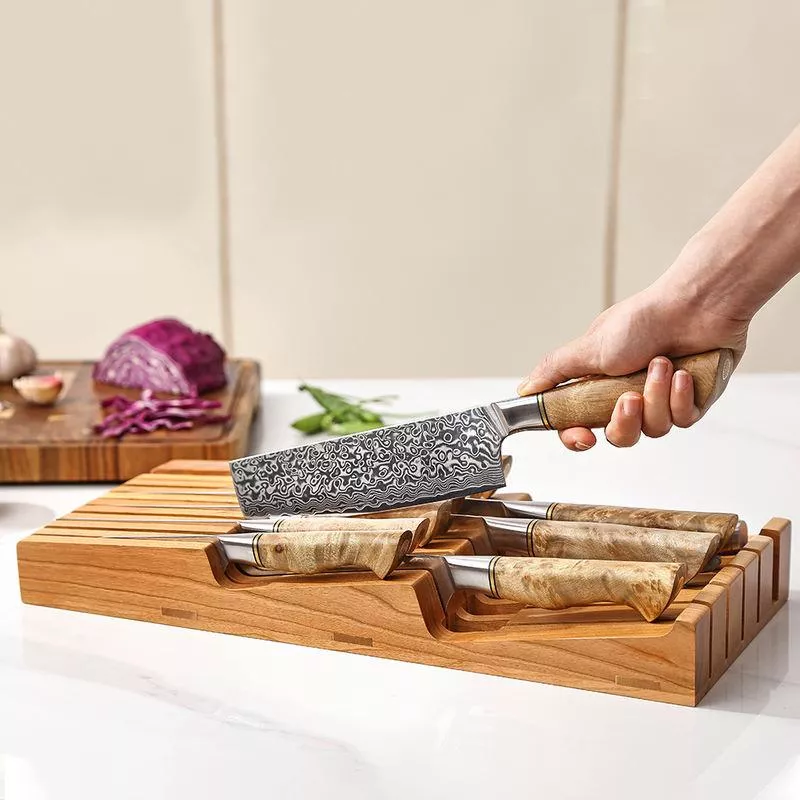
If you’re also comparing wood choices for kitchen organization—like knife trays and drawer inserts—see this related guide: Cherry wood in a drawer knife tray (double step, 11-slot) guide.
FAQ
How do you care for a wooden knife handle?
Hand-wash only, dry immediately, and avoid soaking or the dishwasher. Reapply a food-safe oil or wax occasionally to keep the wood from drying out and to improve water resistance.









Leave a comment