Cherry Wood In-Drawer Knife Tray: Double-Step, 11 Slots
Why an In-Drawer Knife Tray Makes Everyday Cooking Easier
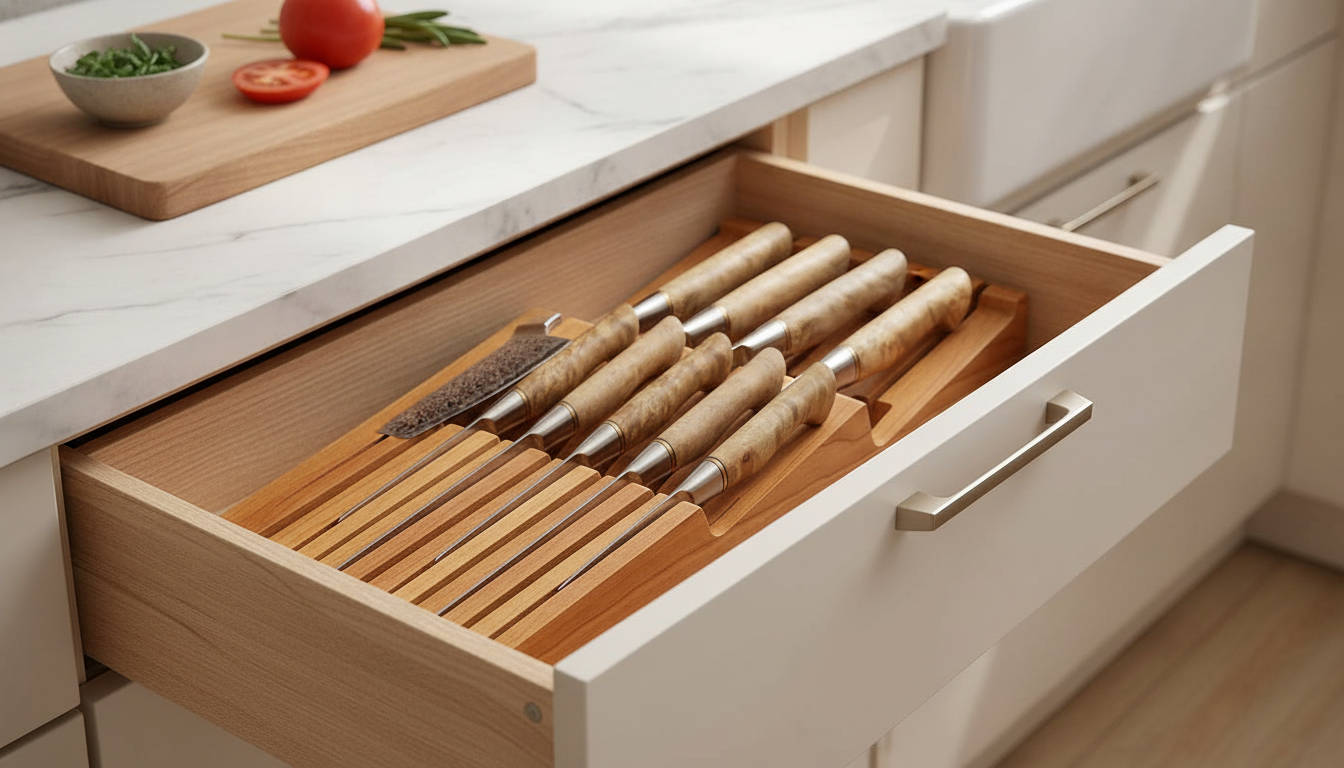
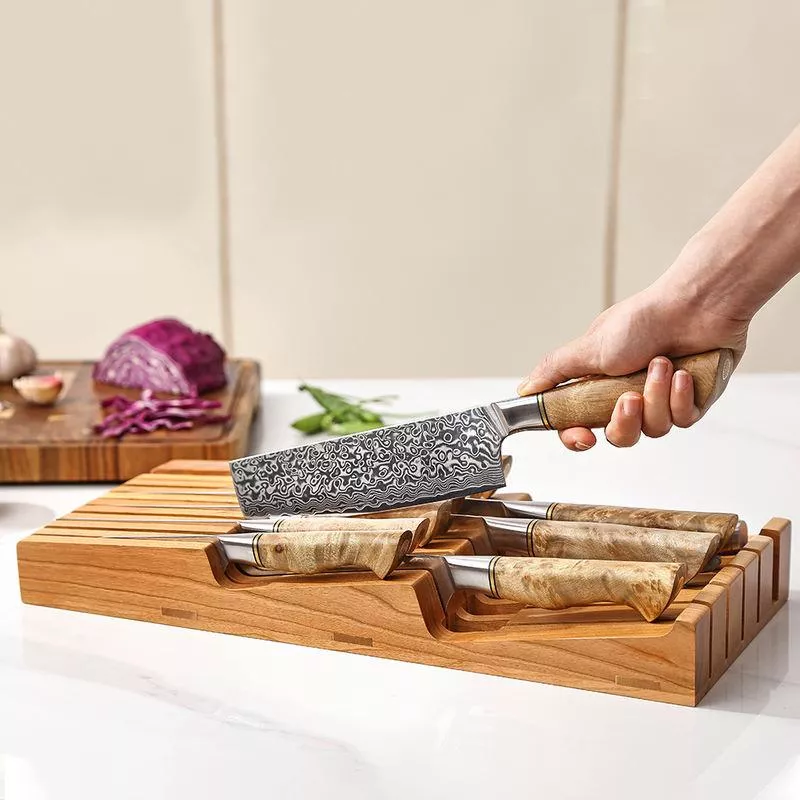
A dedicated in-drawer knife tray keeps blades protected, counters clear, and daily prep safer. The 11-Slot In-Drawer Cherry Wood Knife Tray with Double-Step Design uses a stepped layout to separate knives by size so handles are easy to grab while edges stay shielded inside the drawer. Instead of a pile of loose blades shifting every time the drawer opens, each knife gets a defined home—helpful for speed, safety, and keeping edges from bumping into one another.
What the Double-Step Layout Changes
A flat organizer can force handles to crowd together, especially when a set includes several full-size knives. A double-step design solves that by creating two height levels that stagger handles and separate blades more naturally.
- Less handle overlap: The two-tier profile staggers grips so they don’t stack on top of each other in a standard drawer.
- Better separation by size: Longer knives sit in a deeper channel while shorter blades rest on the higher step for quicker access.
- Reduced edge contact: Compared with loose storage, defined slots help minimize blade-to-blade contact that can dull edges over time.
- A cleaner, calmer drawer: Each slot has an obvious purpose, so it’s easier to keep the drawer organized day after day.
Materials and Finish: Why Cherry Wood Works Well in a Drawer
Drawer organizers take repeated impact from handles and spines, plus the occasional nick from a hurried drop-in after washing. Cherry wood is a practical choice because it balances durability with a surface that’s kinder to blades.
- Hardwood strength: Cherry is a dense hardwood that resists everyday dents better than many softwoods when sliding knives in and out. For a deeper look at the species, see The Wood Database’s cherry (black cherry) profile.
- Gentler on edges: Wood surfaces are typically less harsh on knife edges than many metal or ceramic organizers.
- Quieter, more stable feel: A properly finished wood tray is easy to wipe clean and less likely to rattle than thin plastic.
- Visible crumbs for better cleaning: Natural grain helps small particles stand out so you can remove debris before it builds up.
Capacity and Everyday Fit
This tray is designed as an 11-slot organizer for common kitchen knife sets—ideal when the goal is to keep a primary set together, protected, and easy to reach. The slot-by-slot format also encourages consistent storage orientation, which reduces the chance of contacting an edge when reaching into the drawer.
- Built for typical knife lineups: Chef’s, bread, carving/slicing, utility, and paring knives fit the intent of the layout.
- More predictable grab points: When knives always return to the same positions, fingers naturally go to handles instead of blade areas.
- Best as a dedicated zone: It works best when other tools (openers, tongs, peelers) aren’t sliding into blade channels.
- Check drawer height: Confirm the drawer’s interior height can accommodate the stepped profile without scraping the underside of the counter or drawer frame.
Typical Knife Types by Slot Priority
| Knife type | Common blade length | Best placement | Why |
|---|---|---|---|
| Chef’s knife | 8–10 in | Lower/deeper step | Extra clearance for longer blade and taller handle |
| Bread knife | 8–10 in (serrated) | Lower/deeper step | Protects serrations and keeps tip covered |
| Carving/slicing knife | 8–12 in | Lower/deeper step | Long profile benefits from full channel support |
| Utility knife | 5–7 in | Upper step | Easy grab without crossing larger handles |
| Paring knife | 3–4 in | Upper step | Quick access for small tasks; keeps short blades contained |
Measuring the Drawer for a Clean Install
A knife tray works best when it sits flat and the drawer closes smoothly without catching. A quick measurement check helps avoid tight fits, rocking, or interference from drawer hardware.
Care and Cleaning for Wood Knife Organizers
Keeping the tray clean is straightforward, especially when it’s part of a regular kitchen reset routine. For general kitchen cleaning best practices, the USDA FSIS “Clean” guidance is a helpful reference: USDA FSIS — Kitchen Companion: Clean.
Safety and Edge Protection Tips
Product Details at a Glance
- Name: 11-Slot In-Drawer Cherry Wood Knife Tray with Double-Step Design
- Availability: In stock
- Price: $128.01 USD
- Use case: Organized, edge-protecting in-drawer storage for a primary knife set
- Best for: Cooks who prefer a clear countertop and want a dedicated slot for each knife
More In-Stock Home Finds
- Rectangular Tempered Glass Bathroom Vessel Sink with Waterfall Faucet — a clean, modern update for a bathroom refresh.
- Women’s Summer Pleated Linen Tank Top — lightweight, easy styling for warm days.
FAQ
Will this fit most standard kitchen drawers?
It can fit many standard drawers, but the best way to confirm is to measure your drawer’s internal width, depth, and usable height. Be sure to account for drawer hardware (like side rails or soft-close parts) and confirm there’s enough clearance for the double-step profile to sit flat without rubbing.
Is a wood knife tray sanitary and easy to clean?
A properly finished hardwood tray is easy to wipe clean with a damp cloth and mild soap. Dry it promptly and avoid soaking so moisture doesn’t linger in the wood; regular crumb removal helps keep the drawer fresh.
Can serrated knives be stored in the slots without damaging the edge?
Yes—serrated knives can be stored in the slots as long as you insert them carefully and avoid dragging the serrated edge along the channel. Slide the blade in smoothly and keep it fully seated so the tip stays covered.











Leave a comment