High-Speed Commercial Electric Conveyor Toaster Guide
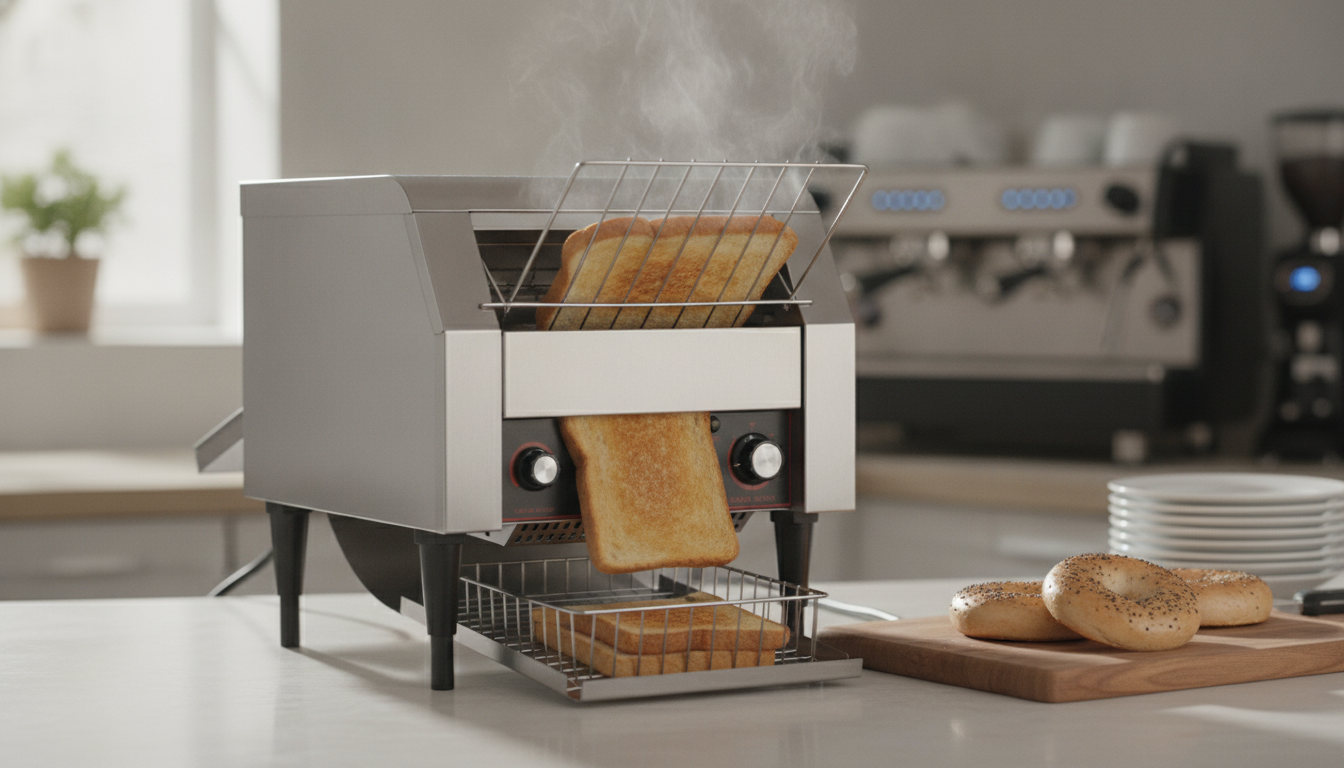
Commercial Electric Conveyor Toaster for High-Speed Toast & Bagels
A conveyor toaster is built for steady output and consistent browning—ideal for busy counters where bread and bagels need to move fast without constant supervision. When breakfast hits or tickets stack up, a continuous-feed toaster helps keep pace with fewer touchpoints, fewer timing mistakes, and more repeatable results across shifts.
Below is a practical guide to what a conveyor toaster does differently, where it fits best, what to compare before buying, and how to set up a workflow that stays consistent from the first slice to the last.
What a conveyor toaster does differently
Unlike pop-up toasters that rely on batch timing and manual attention, conveyor models run a belt through a heated chamber. You load slices or bagel halves on the front, and toasted product exits on the other side at a predictable interval.
- Continuous-feed design: bread and bagels move through on a belt for repeatable results without stopping between cycles.
- Less hands-on time: instead of monitoring multiple slots, staff mainly focuses on loading and catching product at the exit.
- More consistent during rush: browning is governed by conveyor speed and heat settings rather than someone remembering a timer.
- Built for frequent use: designed for repeated cycles and extended operation common in cafés, diners, hotels, and catering lines.
Where it fits best in a kitchen or service line
Conveyor toasters earn their space when output is steady and timing needs to be predictable. Placement matters—especially the landing zone where product exits.
- Breakfast service: bagels, toast, buns, English muffins, and sandwich bread when demand stays steady for an hour or more.
- Front-of-house counters: rapid production with minimal monitoring when paired with clear rules (what goes in, what setting to use).
- Back-of-house sandwich stations: consistent toast level for builds and better pacing during peak tickets.
- Self-serve areas (where allowed): simple controls and predictable results when local safety policies permit and staff can supervise.
Key performance factors to compare before buying
Specs are helpful, but day-to-day performance comes down to how quickly a unit can produce acceptable toast, how repeatably it can hit a target color, and how easy it is to keep clean and safe in a tight space.
What to evaluate
- Throughput: how many slices per hour the unit can realistically handle during continuous operation without bottlenecking the station.
- Browning control: look for fine adjustments using conveyor speed and heat intensity (repeatable settings reduce training time).
- Bagel mode: valuable when one side needs more heat (cut side) while limiting browning on the outside.
- Warm-up time: faster preheat reduces downtime at opening, between meal periods, or after cleaning.
- Heat management: ventilation needs, cool-touch zones, and how well the unit runs for long stretches without overheating nearby surfaces.
- Footprint and clearance: measure counter depth, rear clearance for airflow, and space for the exit chute/landing area.
Quick comparison checklist for a high-speed conveyor toaster
| Factor | Why it matters | What to check |
|---|---|---|
| Output capacity | Prevents bottlenecks during rush | Slices/hour rating and real counter workflow |
| Conveyor speed range | Controls browning and texture | Low-to-high speed adjustment; repeatable settings |
| Heat control | Balances color vs. dryness | Independent heat levels or stepped settings |
| Bagel capability | Improves cut-side toast without burning | Dedicated bagel setting or top/bottom heat control |
| Build and serviceability | Reduces downtime | Removable crumb tray, accessible belt, replaceable parts |
| Electrical fit | Avoids tripped breakers and rewiring | Voltage, wattage, plug type, dedicated circuit needs |
Getting consistent results: practical settings and workflow
Consistency is rarely about one “perfect” setting—it’s about a repeatable process. Small changes in bread thickness, temperature, or moisture can shift results, so standardizing how product is staged and how settings are adjusted matters as much as the toaster itself.
Cleaning, maintenance, and safety routines
For broader kitchen safety practices around heat and cooking equipment, review guidance from the US Fire Administration and NFPA cooking safety resources. For foodservice sanitation and handling principles, the FDA Food Code is a useful reference point.
Product spotlight: Commercial Electric Conveyor Toaster – High-Speed Bread & Bagel Maker
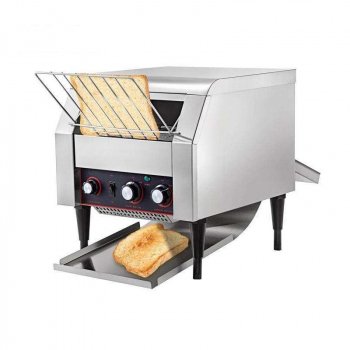
If your goal is steady toast output with less babysitting, the Commercial Electric Conveyor Toaster – High-Speed Bread & Bagel Maker is designed around a continuous conveyor workflow that supports repeatable browning in fast-paced breakfast and sandwich service.
At-a-glance details
| Item | Details |
|---|---|
| Product | Commercial Electric Conveyor Toaster – High-Speed Bread & Bagel Maker |
| Price | 570.17 USD |
| Availability | In stock |
| Product page | View product |
Other in-stock picks
- Rectangular Tempered Glass Bathroom Vessel Sink with Waterfall Faucet
- Women’s Summer Pleated Linen Tank Top
FAQ
How do conveyor toasters control browning?
Browning is mainly controlled by conveyor speed (how long the bread stays in the heated chamber) and heat intensity. Change one variable at a time, then record the setting that hits your target color so it can be repeated consistently.
Can a commercial conveyor toaster handle bagels without burning them?
Yes—especially when a bagel setting emphasizes heat on the cut side while reducing browning on the outside. Keep bagel thickness consistent and fine-tune speed and heat together to avoid scorching while still getting a deep cut-side toast.
What routine maintenance keeps a conveyor toaster performing well?
Empty the crumb tray daily, keep vents and intake/exhaust areas clear, and inspect the belt path for buildup on a weekly cadence. Periodically check the power cord and outlet for wear or heat damage, and always let the unit cool before cleaning.











Leave a comment